Is AI-built software safe for compliance or audited work?
THE SHORT ANSWER
It can be, if people own the requirements and the review, and the output gets verified against written rules. Compliance work suits AI-assisted development because the rules are explicit and the results can be checked. It is unsafe when nobody can say what the software is supposed to do, or nobody checked that it does.

Why compliance work is a good fit
People assume regulated work is where AI-assisted development can’t go. For this kind of system, it is where the approach is strongest. If a regulator accepts what you deliver, the rules are already written down, so there is no guessing about what “done” means. The acceptance criteria exist before the first line of code.
When an auditor is the final user, “close enough” is a liability. Explicit rules and verifiable output give you a way to catch that.
What makes it unsafe
The speed is the risk. AI makes it cheap to produce software nobody has checked, and that software can look finished. Watch for these:
- Nobody wrote down what the system must do before it was built.
- One person generated it and nobody else reviewed it.
- The output can’t be traced back to a rule or a policy.
- The answer to “who owns quality?” is a tool.
What a safe process looks like
The judgment stays human, and the verification is relentless. On the Tear-A-Wipe build, that meant clear acceptance criteria, an agent iterating until every box was checked, then human review of the code and the audit trail. The certificate records the policy each wipe was held to, so the evidence is part of the output.
At New Era Systems, practitioners build under one methodology architect, nobody works alone, and nothing ships without that review. Coding is the part the tools took over. You are paying for someone who knows what good looks like and holds the line.
What to ask before you trust it
- What were the acceptance criteria, and where are they written down?
- Who reviewed the output, and who can overrule a weak technical decision?
- Can you show me how a result traces back to a rule?
- What leaves with me if the relationship ends?
If you are weighing this against a vendor, the build vs rent guide covers the math.
COMMON QUESTIONS
Can AI-written code pass an audit?
An auditor looks at evidence: what the rule was, what the system did, and who is accountable. How the code got typed matters less than whether that record exists.
Who is responsible when AI writes the code?
A named human. At New Era Systems, nothing ships without the methodology architect's review. If a firm can't tell you who owns final quality, keep asking.
Why is compliance software a good fit for AI-assisted development?
The requirements are deterministic. You can define the acceptance criteria clearly, let the agent iterate until every box is checked, then bring in human judgment for code review, audit, and the decisions that need experience.
Should I use AI-built software for regulated work without a developer?
Not for anything an auditor will read. Someone has to know what good looks like, check the output, and stand behind it.
KEEP READING
 Deciding
Should your firm build its own compliance software or keep renting it?
Build when the vendor charges you again for every client and the tool sits inside the product you sell. Keep renting when the bill is small and stays small, or when the software has nothing to do with what clients pay you for. To check, add up what you pay per year, then compare it with the cost of owning.
Read the guide → Definitions
What is anti-discovery?
Anti-discovery is how New Era Systems replaces the paid discovery phase. It is a free targeting exercise that takes days, not weeks, and looks for enough signal to build something real. If we can't find that signal, we tell you and both sides walk away with no invoice.
Read the guide →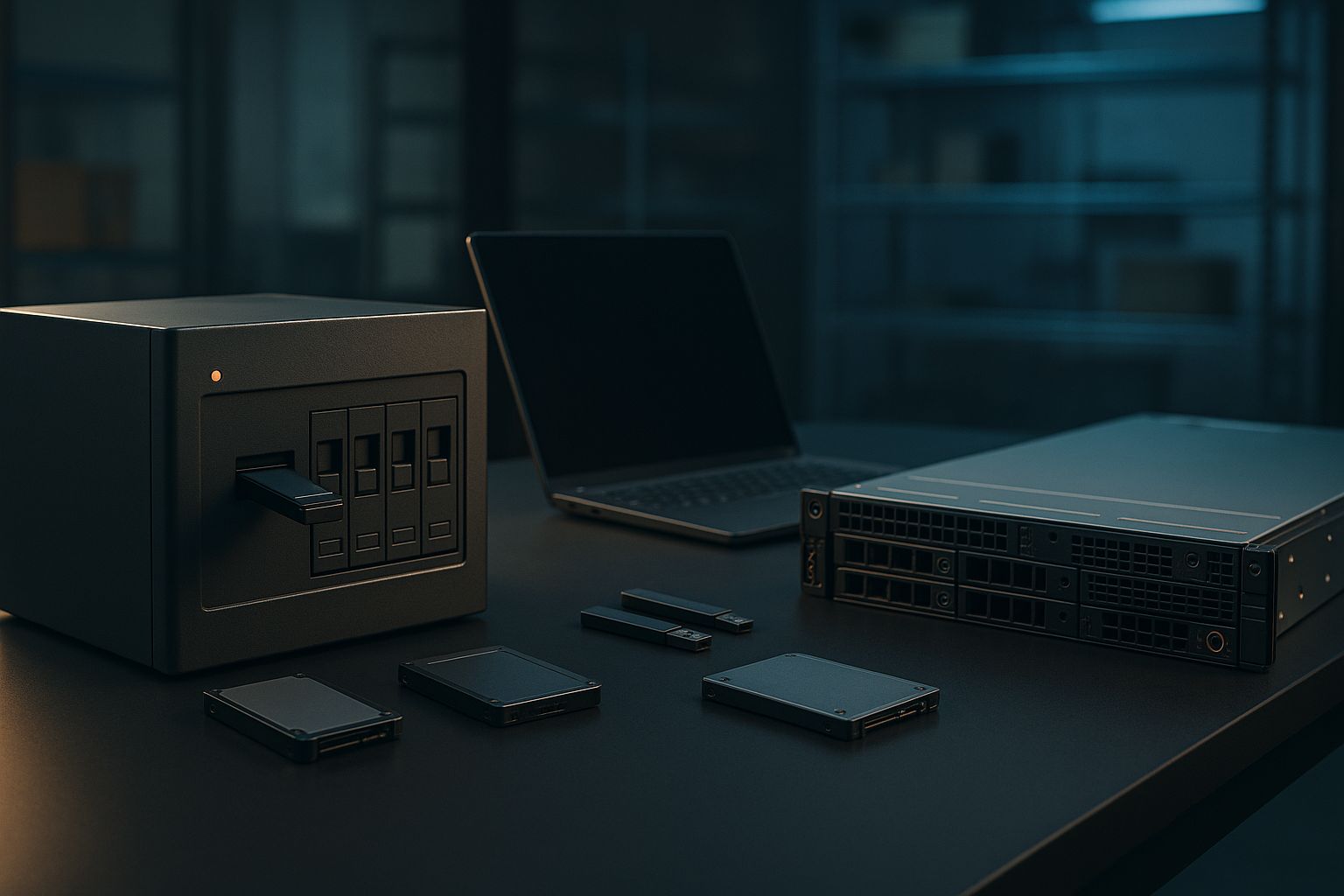 By industry
Custom data destruction software for ITAD firms
Data destruction software for an ITAD firm has to tie each certificate to the exact drive, its asset record, and the policy the wipe was held to. New Era Systems built that for TechR2. Tear-A-Wipe is a policy-driven wiping suite, NIST 800-88 compliant, in production, with no manual export step.
Read the guide →BRING US THE PROBLEM.
A targeting exercise that costs you nothing, a working prototype before you sign anything, and a date that holds.