ORDO
The agent that knows when to stop being one.
Deploy agentic workflows that can reason, show their work visually, and hand control to a human the moment the situation demands it.
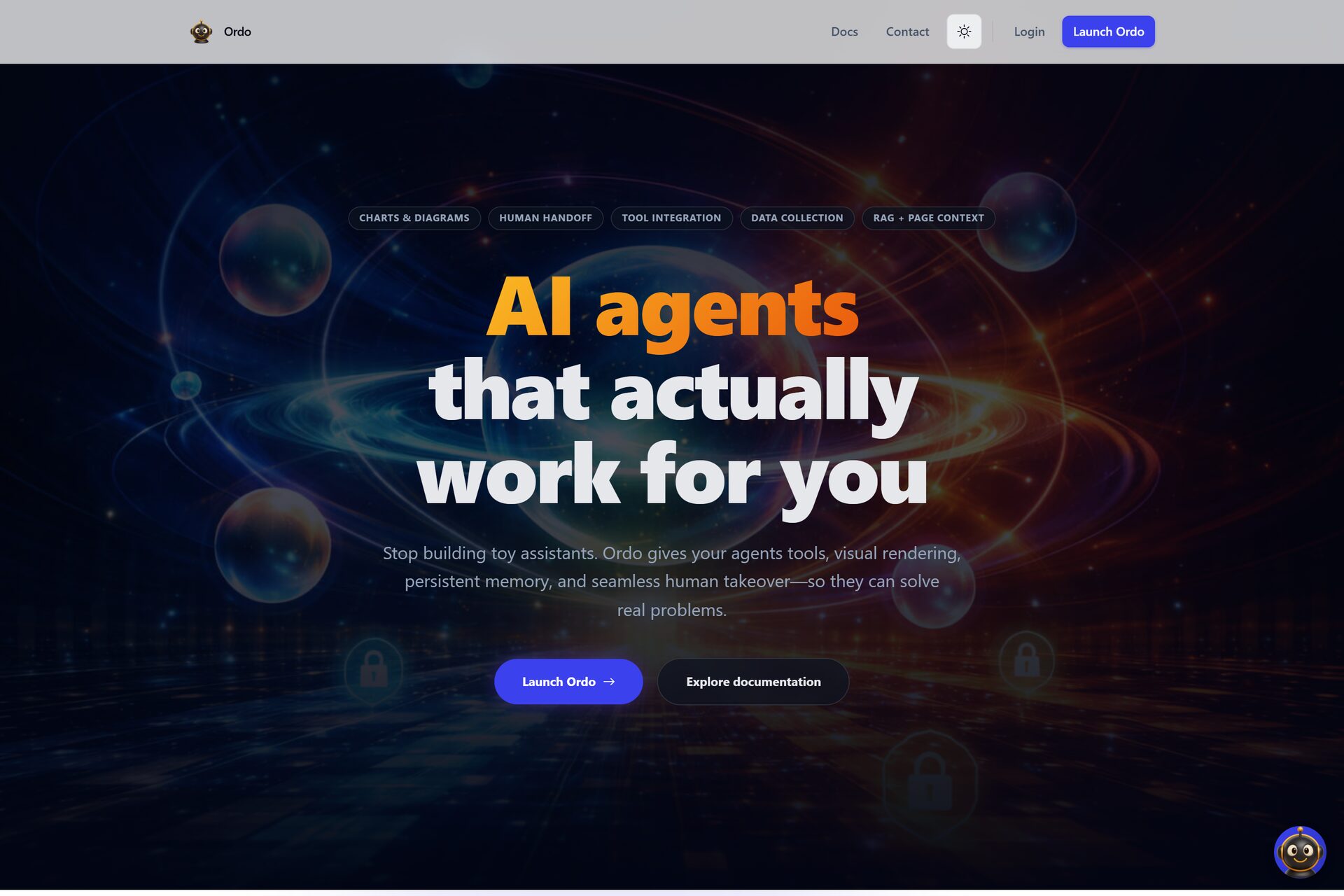
- // Ground agents in the right documents, tools, and workflow context instead of forcing one-shot prompting.
- // Present answers as diagrams, tables, and rich visual artifacts when plain text is not enough.
- // Keep a human in the loop with explicit takeover points for policy, edge cases, and trust-building moments.
- // Embed the same intelligence layer across internal operations, customer touchpoints, and live demos.
Ordo is the product expression of a simple idea: agents become useful when they can operate inside the real shape of work. That means more than a chat box. It means tool access, grounded context, visual explanation, and a clear mechanism for human takeover when the stakes go up.
Ordo is owned and operated by New Era Systems, LLC. The New Era Systems Privacy Policy and Terms of Service apply to Ordo, including its human handoff SMS alerts.
For New Era Systems, Ordo represents the kind of operational AI we like building: systems that produce understandable outputs, fit into existing workflows, and do not force teams to choose between automation and control.
Where it fits
- Internal copilots that need access to workflow state, documents, and operational tools.
- Customer-facing assistants that must stay grounded and escalate cleanly.
- Guided decision-support systems where explanation and auditability matter as much as speed.
Why it matters
Plenty of AI products can generate text. Far fewer can hold onto context, move between modalities, and stay composable enough for production work. Ordo is about that production posture: grounded, inspectable, and useful in the messy middle of real operations.
READY TO DEPLOY THIS INTO YOUR WORKFLOW?
We help teams integrate products into real operating models — not just install software.